Neighbourhood Marrakech, Morocco
Cats in The Marrakech Medina
The souks, the square and the riads of a city that treats cats as a religious courtesy: on the carpets, on the leather, under the food stalls of Jemaa el-Fna, and in the gardens where the tourists go to breathe.
Where to find cats in The Marrakech Medina: The medina of Marrakech, the walled old city: Jemaa el-Fna, the souks north of it, and the gardens and riads around them. When: Morning in the souks before the crowds, and Jemaa el-Fna at dusk when the food stalls light up. October to April; the summer is brutal. Why here: A Muslim city where kindness to cats is tradition, and they are everywhere as a result.
The short version
- Where
- The medina of Marrakech, the walled old city: Jemaa el-Fna, the souks north of it, and the gardens and riads around them
- When
- Morning in the souks before the crowds, and Jemaa el-Fna at dusk when the food stalls light up. October to April; the summer is brutal
- How long
- A day for the square and the souks. Two with the gardens
- What it costs
- The streets are free. The madrasa and the gardens have tickets. Everything else is a negotiation
- Why here
- A Muslim city where kindness to cats is tradition, and they are everywhere as a result
What to bring
- Early morningThe souks at eight are shopkeepers sweeping and cats on the carpets. By eleven they are a river of people.
- Small dirhamsFor the orange juice on the square, the tea, and a note for the man whose cat you have been photographing on his stall.
- A sense of direction, or a guideThe souks are a maze by design. Getting lost is the experience; getting lost at dusk is less fun.
- Nothing for the catsThe butchers, the fishmongers and the food stalls feed them. Yours is not needed.
Why there are cats everywhere
The Prophet, the story goes, cut off his sleeve rather than wake the cat sleeping on it. Marrakech has been living by that ever since.
Cats are clean in Islamic tradition, allowed in the house and the mosque, and kindness to them is a small act of faith. Morocco takes this seriously. The medina of Marrakech, the walled city of souks, riads, mosques and one enormous square, is full of cats because every butcher’s stall, every fish seller, every carpet shop and every doorstep feeds one. They sleep on the leather, they sit on the spice sacks, and in the evening they work the edges of the food stalls on Jemaa el-Fna, where the smoke goes up and the whole city comes to eat.
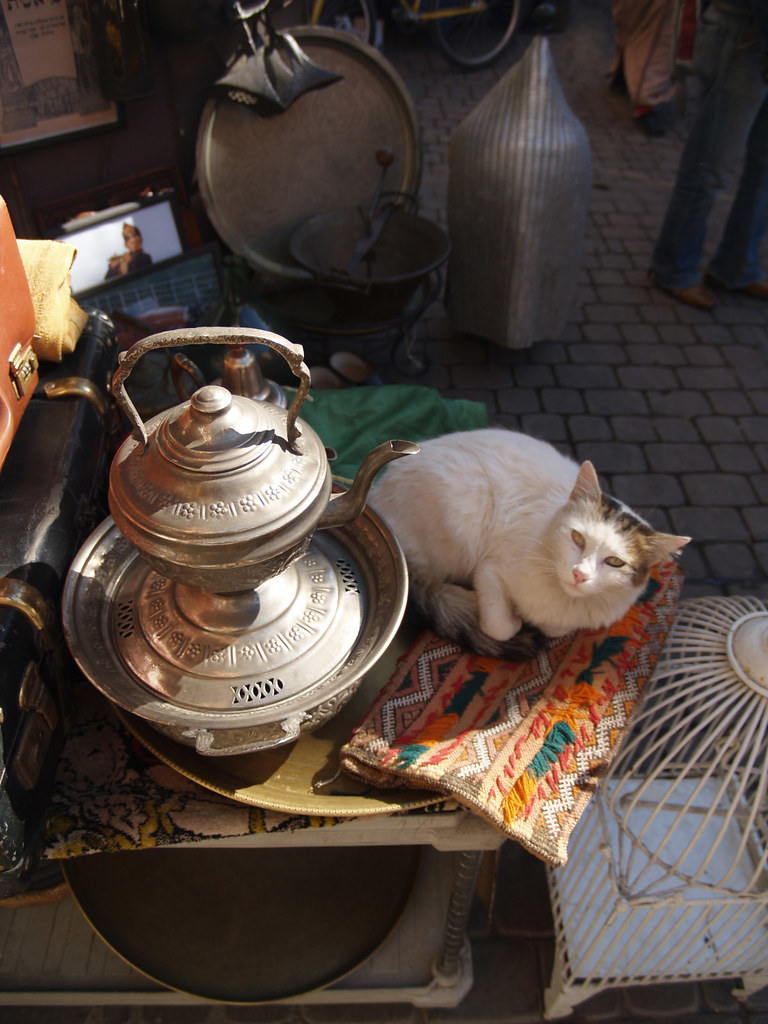
It is not all easy. There are too many, the kittens in the alleys are thin, and the charities that neuter and treat them are small and run on foreign donations. But the culture is on their side, and a street cat in Marrakech is a cat that someone will feed. The souks are the best place to see it: cats on the goods, tolerated by the shopkeepers because a cat on a carpet is good for a carpet.
The gardens are the other side. Jardin Majorelle, the blue garden Yves Saint Laurent saved, has cats among the cactuses. Le Jardin Secret, in the medina, has them on the paths. The madrasa of Ben Youssef, the most beautiful building in the city, has them in the courtyard. And Jemaa el-Fna at dusk has all of them, and the snake charmers, and the storytellers, and the smoke.
The walk
The square in the morning, north into the souks, out to the madrasa, then a taxi to Majorelle. Back to the square at dusk for the food stalls. A day.
- From Marrakech Menara airportTaxi to the medina20 minFixed fares are posted at the airport. Taxis cannot enter the souks; walk the last part.
- From Gueliz, the new townWalk down Avenue Mohammed V25 minOr a petit taxi for a few dirhams. The Koutoubia minaret is the landmark.
- From Marrakech railway stationTaxi to Jemaa el-Fna15 minTrains from Casablanca and the high-speed line from Tangier arrive here.
Jemaa el-Fna, morning
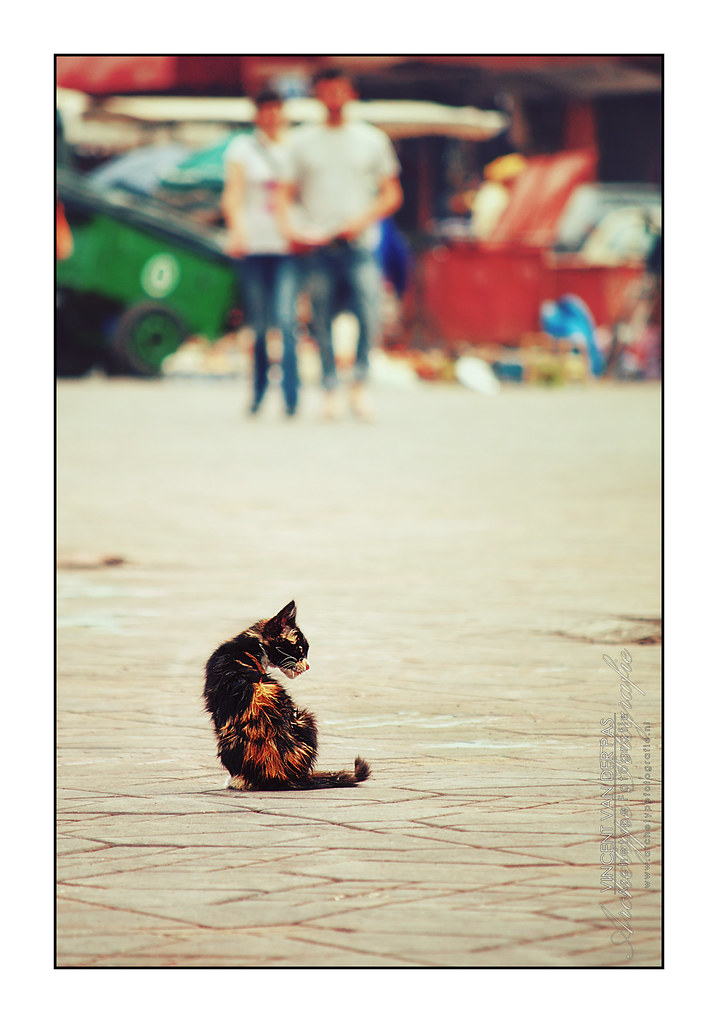
The great square, empty-ish in the morning: orange juice carts, a few snake charmers setting up, and cats at the edges. Come back at dusk when it is the greatest show in North Africa.
A kitten on the square, before the crowds. It is a vast world.Vincent_AF, CC BY-SA 2.0 Souk Semmarine
The main artery of the souks, north from the square: leather, lamps, slippers, and cats on all three. Turn off it into the smaller souks, spices, metalwork, dyers, where the cats are on the sacks.
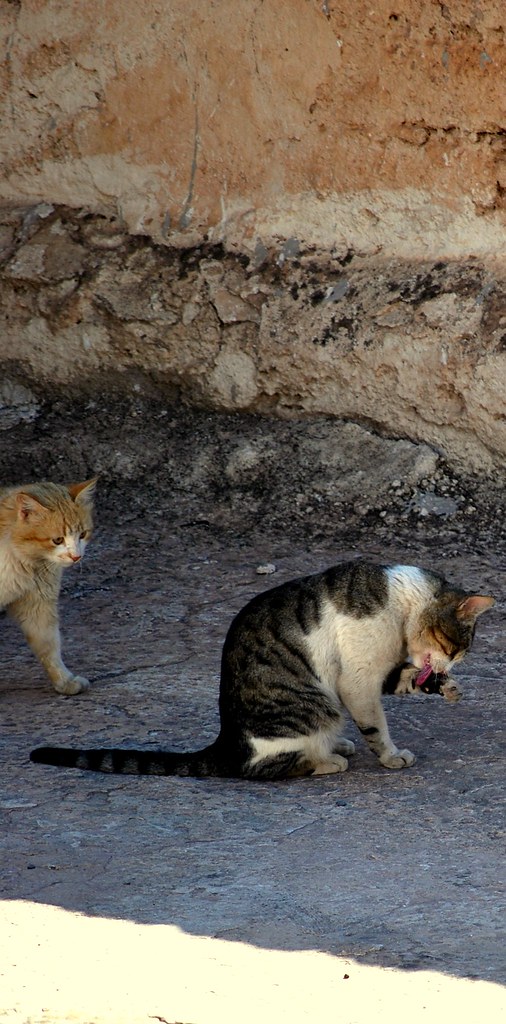
Two at a pink wall, which in Marrakech is any wall.cabezadeturco, CC BY-SA 2.0 Ben Youssef Madrasa
At the north end of the souks, the sixteenth-century Koranic school, restored, with a courtyard of carved cedar, stucco and tile. Ticket at the door. Cats in the courtyard, on the cool tiles.
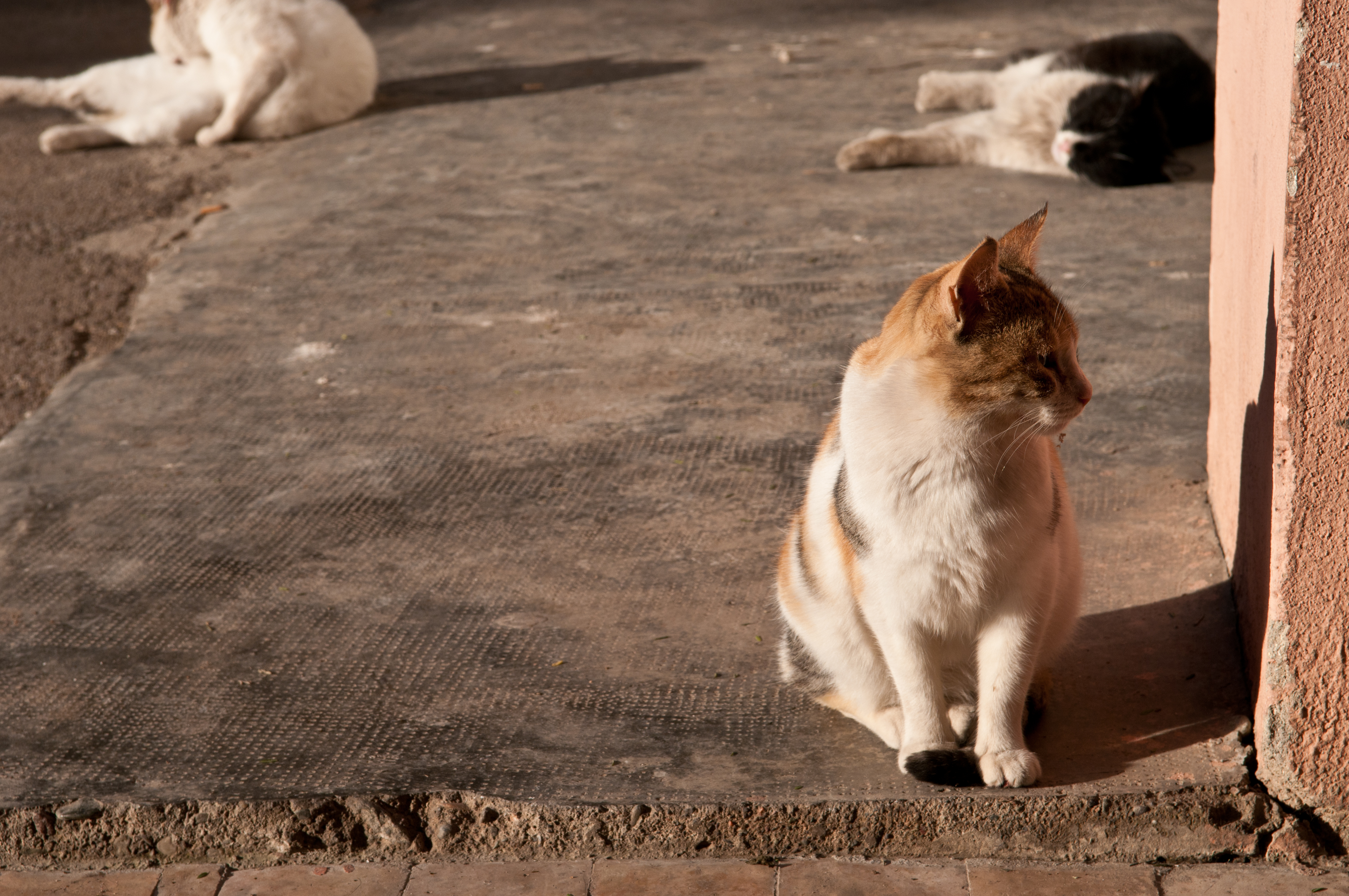
Near the madrasa. The tiles are cool and the cats know it.Michal Osmenda from Brussels, Belgium, CC BY-SA 2.0 Jardin Majorelle
A taxi out of the medina to the blue garden, with its cactuses and the Berber museum. Ticket, and a queue; book online. Cats among the plants, the best-fed in the city.
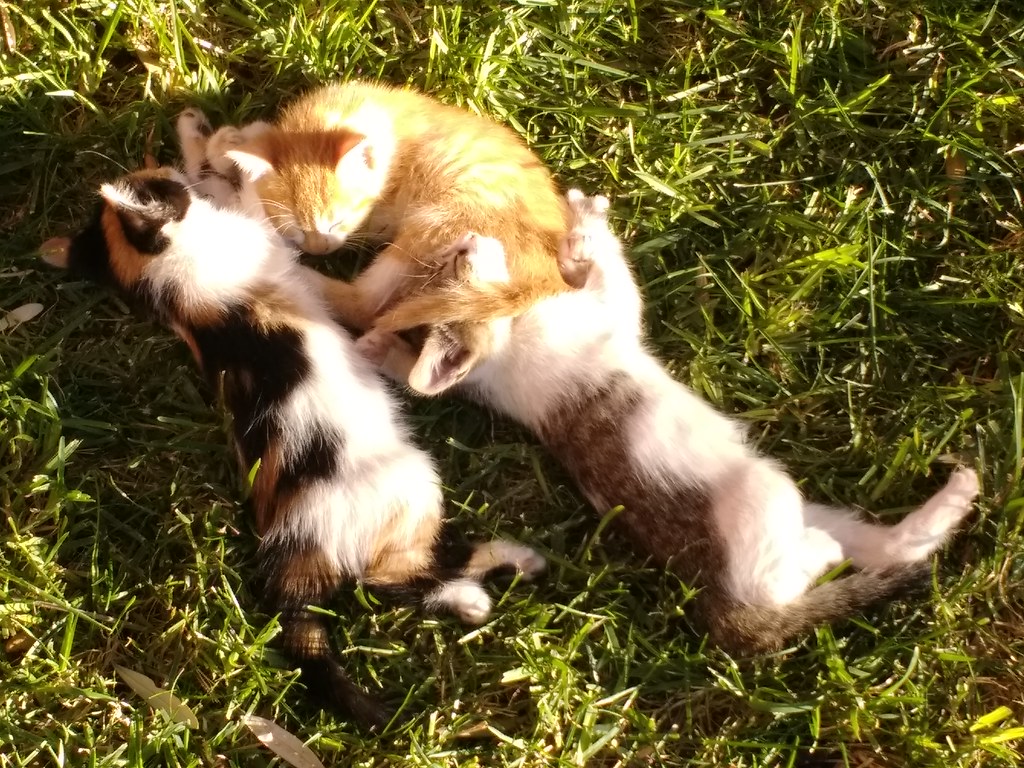
A mother and kittens. The gardens are where the lucky ones live.muffinn, CC BY 2.0
Same numbers as the list. Worth keeping open on your phone.
The cats you will meet
Moroccan street cats: small, short-coated, tabby and ginger and white, in large numbers, fed by shopkeepers and stalls, and used to a great many hands. Sociable in the souks, thin in the alleys, and most comfortable in the gardens.
Souk cats
On the carpets, the leather and the spice sacks.
The shopkeeper’s. Ask before you photograph the shop.
Square cats
At the edges of the food stalls at dusk.
Fed on the leftovers of the greatest food market in Morocco.
Garden cats
Among the cactuses at Majorelle.
The best-fed cats in the city, and they know it.
Everybody says The cats are fine because Islam looks after them.
Actually The culture feeds them, which is why there are so many. It does not neuter them, and the alleys have too many thin kittens. The small charities that do that work run on donations. Give to one.
How not to be the annoying one
- Ask before photographing a stall, even for the cat. The shopkeeper is in the picture too.
- Do not feed on the square. The stallholders do, and the pigeons and the touts will find you.
- Kittens in the alleys are the charities’ work. Give to them; do not carry one off.
- Dress for a Muslim city: shoulders and knees, especially near the mosques.
- A firm, cheerful no is the language of the souks. Practise it.

